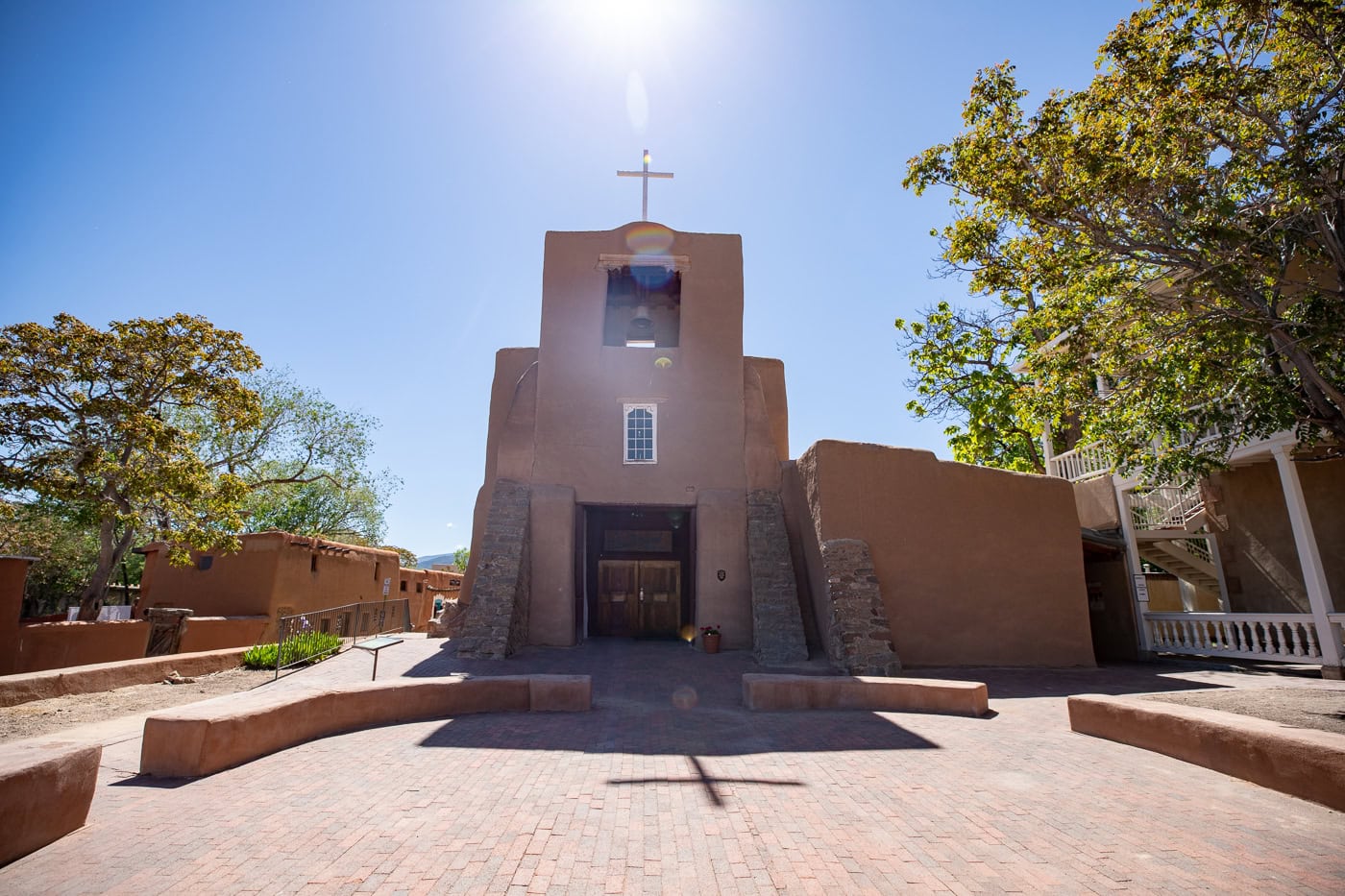
In the historic heart of Santa Fe, New Mexico, stands a structure that has withstood the passage of time: San Miguel Chapel. The church is known as “the oldest church in the United States,” though some contest the title and others refer to it more specifically as “The Oldest Catholic Religious Structure in the USA, on its Original Foundation, Still Holding Services” or “The Oldest Church in the Continental United States”
San Miguel Chapel’s origins trace back to the early 1600s, with oral history suggesting its construction began around 1610. Built under the direction of Franciscan friars by Tlaxcalan laborers, the adobe chapel served as a place of worship for soldiers, laborers, and Indigenous residents of the Barrio de Analco, a national historic district in Santa Fe.

The Road Trip Journal & Activity Book
Enjoy fun games and challenges to pass the time on your next road trip and have a keepsake to look back on for years to come with this entertaining must-have for your next vacation.
The chapel endured tumultuous times, including its partial destruction during the Pueblo Revolt of 1680. Rebuilt in 1710 by Governor José Chacón, the chapel has seen over 400 years of transformations, from Spanish and Mexican rule to becoming a part of the United States. Its sacred walls have borne witness to countless lives and events, serving as a community church, a military chapel, an infirmary for missionaries, and today, as a functioning space for worship and cultural events.
Some key features of the church include:
- San José Bell: This 780-pound bell, displayed within the chapel, is steeped in legend. Said to have been cast in Spain in 1356 from melted gold and silver jewelry, it was brought to Santa Fe in 1692. According to local lore, ringing the bell ensures a return to Santa Fe—a tradition visitors can experience firsthand.
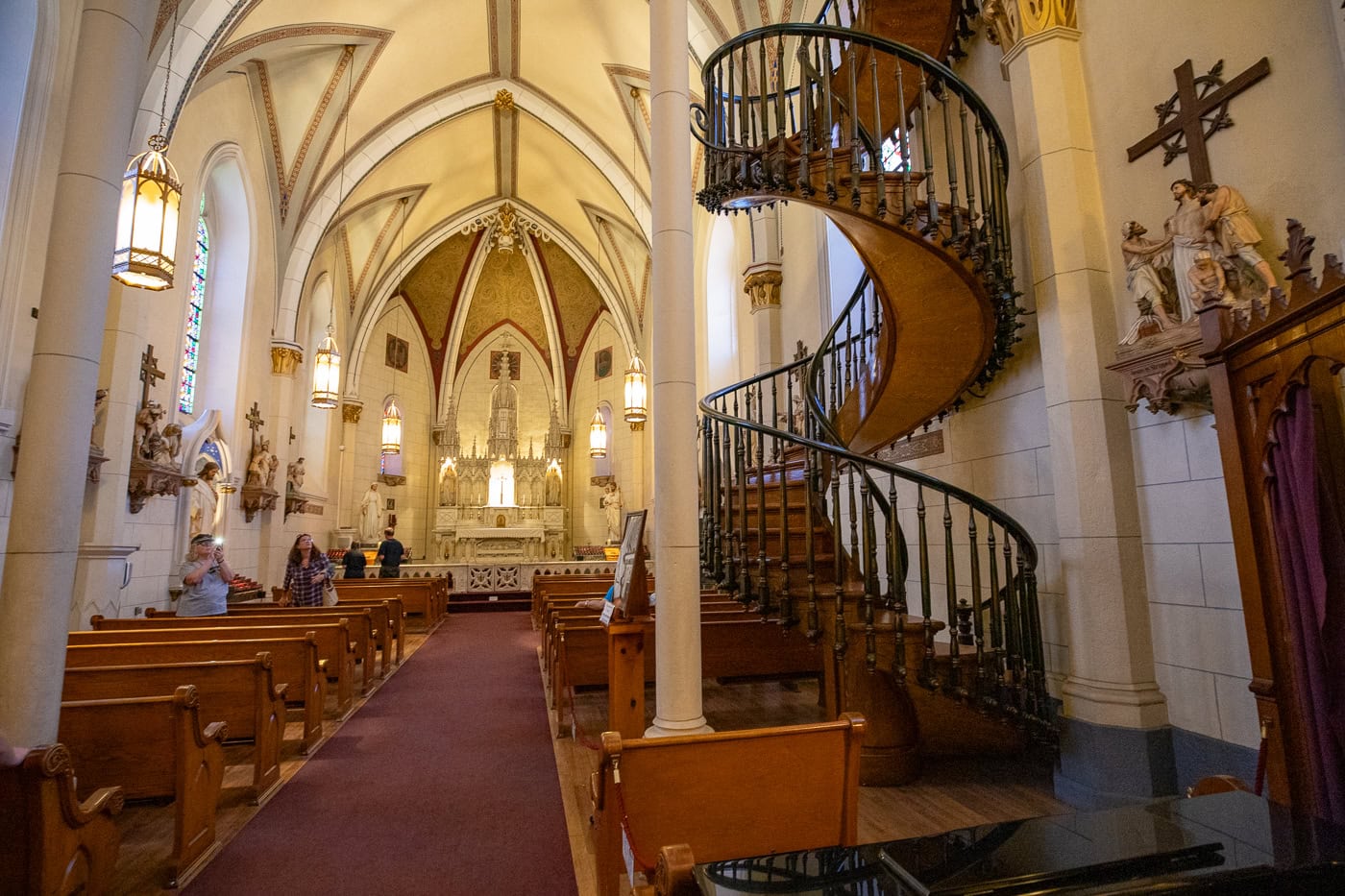
- The Altar Screen: An 18th-century masterpiece of Spanish colonial craftsmanship, the altar screen adds depth and beauty to the chapel’s rustic interior.
- Historic Statues and Art: Among the most notable pieces is a statue of San Miguel (St. Michael), carved in Mexico around 1700 and brought to Santa Fe by Franciscan friars.
Photos of San Miguel Chapel in Santa Fe, New Mexico